
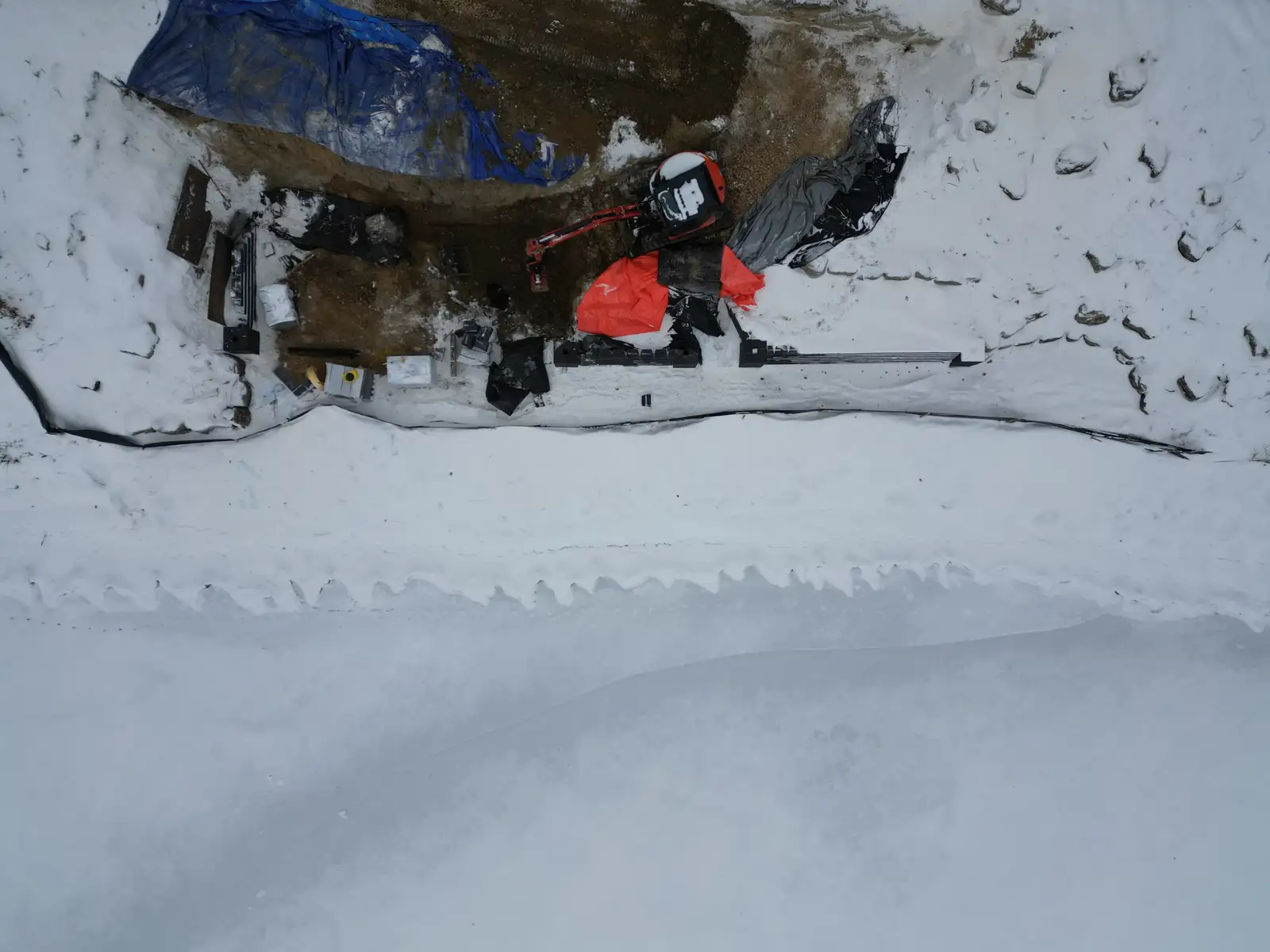
A wet-yard diagnosis begins with evidence: when the water appears, where it enters, how long it remains, and whether soil or surface grade is preventing it from leaving. Choosing a drain product before those questions are answered can move the symptom without resolving the source.
Identify whether water arrives from above or below
Fast ponding during a storm often points to concentrated roof or hardscape runoff. A low area that remains soft for days can indicate compacted soil, a shallow outlet, groundwater influence, or a grade that has settled. Water beside a retaining wall may be coming through the retained soil rather than across the lawn surface.
Record the timing. Note whether the area is wet only during intense rain, every spring, after irrigation runs, or throughout dry weeks. That pattern narrows the investigation before excavation begins.
Trace roof water and hardscape runoff
Follow every nearby downspout, driveway edge, patio pitch, stair landing, and neighboring slope. A single downspout can discharge a large volume into a side yard, while an older patio may send water toward the foundation even when the surrounding lawn appears properly graded.
Downspout extensions or solid pipe may be appropriate when roof water needs a defined route. Surface grading may work better when water is spread across a broad area. The outlet must be practical in both cases; a pipe without a dependable discharge point is not a complete solution.
Separate a surface-grade problem from a soil problem
A shallow depression can often be corrected with thoughtful grading, but adding soil blindly can raise beds against siding, bury tree flares, or move runoff toward a neighbor. Compacted subsoil may require removal or amendment so turf and planting areas can absorb normal rainfall.
Simple field check: compare the wet area with an adjacent dry area after the same storm. Differences in elevation, soil texture, shade, and nearby runoff sources help explain why one location recovers and the other does not.
Choose an outlet before choosing a drain
A French drain collects water moving through saturated soil. A catch basin collects concentrated surface water. Solid pipe carries water from a known source such as a downspout. A swale moves water across the surface using a broad, mowable grade. Each method solves a different part of the problem.
The selected outlet must avoid creating erosion, icing, or a new wet area. Shorewood properties near the lake or on established grades may also need the discharge path reviewed in relation to neighboring lots and shoreline conditions.
Inspect patios and retaining walls as drainage systems
Hardscape changes both runoff volume and direction. Paver patios need consistent pitch away from structures. Retaining walls need drainage aggregate and pressure relief behind the face. Stairs, bed edges, and wall returns can unintentionally trap water when elevations are not coordinated.
If a wet area sits beside a patio or wall, the scope should address the structure and the yard together. Correcting only the lawn may leave the main water source untouched.
Build for spring thaw
Snow storage, frozen soil, roof melt, and spring rain can combine before the ground is ready to absorb water. Drainage improvements should remain serviceable during shoulder seasons, and outlets should be positioned where ice buildup will not create a walking hazard.
Cleanouts and accessible outlet points make future maintenance easier. The estimate should explain which components can be inspected and what seasonal care the system needs.
What to document before the site visit
- Photos or short video during active rainfall
- The time needed for standing water to disappear
- Downspout and sump-discharge locations
- Recent patio, wall, roof, or grading changes
- Soft turf, washout, foundation moisture, or winter icing
Lifecycle Outdoor Services provides yard drainage services for Shorewood homeowners. Use the contact form to share storm photos, the affected area, and any known history before the site review.