
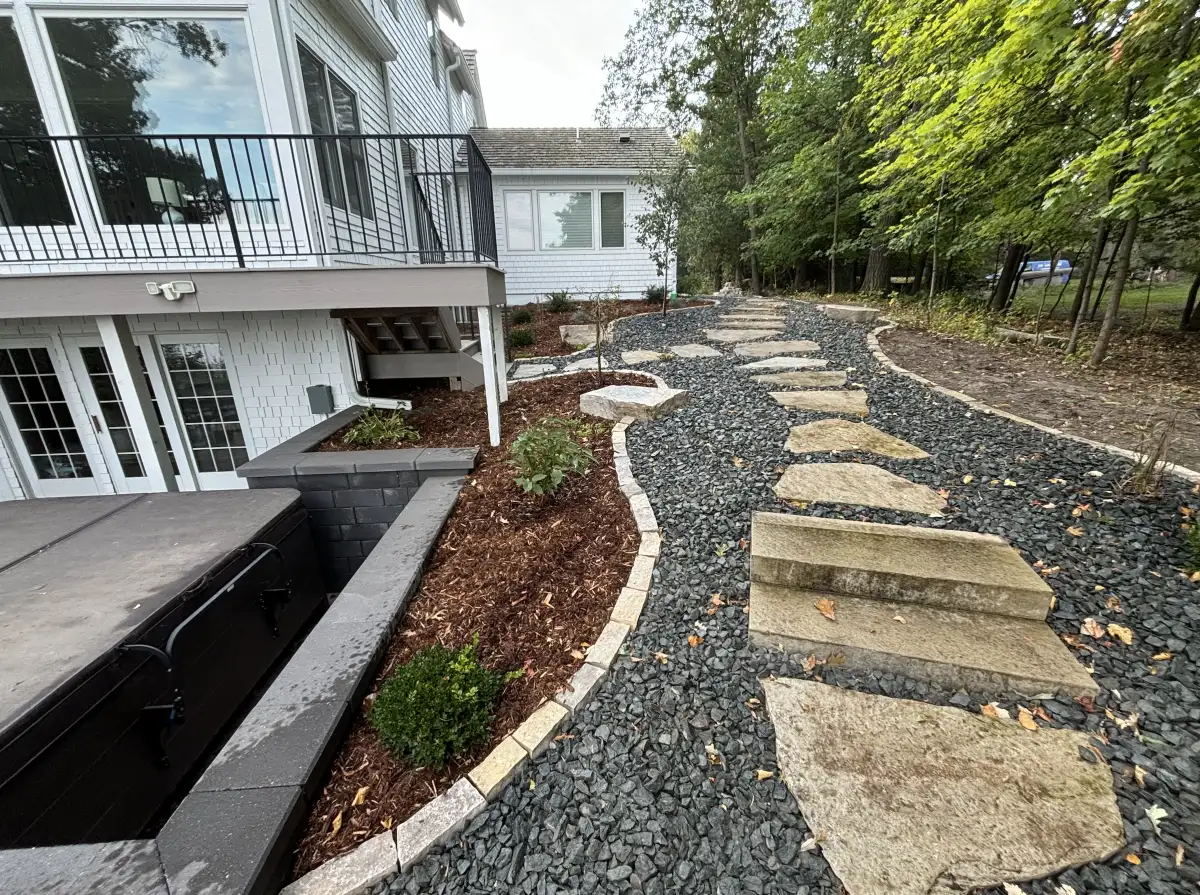
Effective grading creates a continuous, intentional path for water from the highest collection points to a safe outlet. That path may use positive slope, a shallow swale, hardscape pitch, drain tile, or a combination of methods, but every segment needs to work together.
Start with the high points and the outlet
Before moving soil, identify fixed elevations: foundation openings, door thresholds, driveway edges, neighboring grades, mature tree roots, shoreline setbacks, and the final discharge area. These points establish how much vertical room is available for a workable slope.
The outlet is just as important as the starting elevation. Water should not be redirected onto neighboring property, trapped behind a wall, or concentrated where it creates erosion or winter icing.
Map runoff before moving soil
Rooflines, downspouts, driveways, walks, patios, and uphill lawns contribute water at different rates. Walk the property during a strong rain if possible, then mark flow lines, ponding, washout, and areas that stay dry. The dry areas can be as informative as the wet ones because they reveal where existing grades are already working.
Useful photos: take one wide image showing the full slope and several close images of low points, downspout outlets, wall ends, and surface transitions.
Set finished elevations around doors and foundations
Positive slope away from the house needs adequate clearance below siding and door thresholds. Raising a planting bed may hide a low spot while creating a moisture risk at the foundation. Lowering grade can expose footings or create awkward transitions to walks and steps.
Where space is limited, a defined drainage system may supplement grading. The design should explain which water remains on the surface and which water enters pipe or aggregate.
Shape swales that remain usable
A swale is a broad, shallow channel that guides runoff without acting like a ditch. Its width and side slopes should fit mowing, planting, and everyday circulation. Narrow, abrupt channels are more likely to erode and can be difficult to maintain.
On a wooded or lake-area lot, the swale may need to curve around roots and established landscape features. The lowest line should remain continuous even when the finished shape looks natural.
Coordinate subgrade below patios and walls
A patio's surface pitch only works when the base and surrounding grade support the same drainage direction. A retaining wall changes the slope and needs drainage behind the structure. Steps, bed edging, and wall returns should not interrupt the planned flow path.
Coordinate paver patio installation and retaining wall construction with grading before finish materials are selected. This prevents a visually appealing feature from becoming a barrier to runoff.
Preserve access while rough grades are open
Grading work requires room for excavation, soil placement, compaction, and hauling. Keep the equipment route available until the heaviest work is complete. Building a finished walk or planting a narrow side yard too early can force crews across new surfaces during later phases.
Temporary erosion control and rain planning matter while soil is exposed. Stockpiles and open grades should not send sediment toward streets, neighboring properties, or the lake.
Finish with soil and turf restoration
Final grading includes more than shaping subsoil. Topsoil depth, seed or sod preparation, planting-bed edges, and settlement allowance affect how the surface performs after the crew leaves. New turf should blend into existing lawn without creating a ridge that interrupts flow.
Lifecycle Outdoor Services provides grading and yard drainage for Shorewood properties. Share rain photos, known low spots, downspout locations, and recent site changes through the project estimate form.
Grading plan checkpoints
- Fixed elevations at doors, siding, walks, and drives
- Existing and proposed runoff sources
- Continuous surface flow to a safe outlet
- Wall drainage and hardscape pitch
- Neighboring grade and erosion considerations
- Topsoil, turf, planting, and settlement restoration