
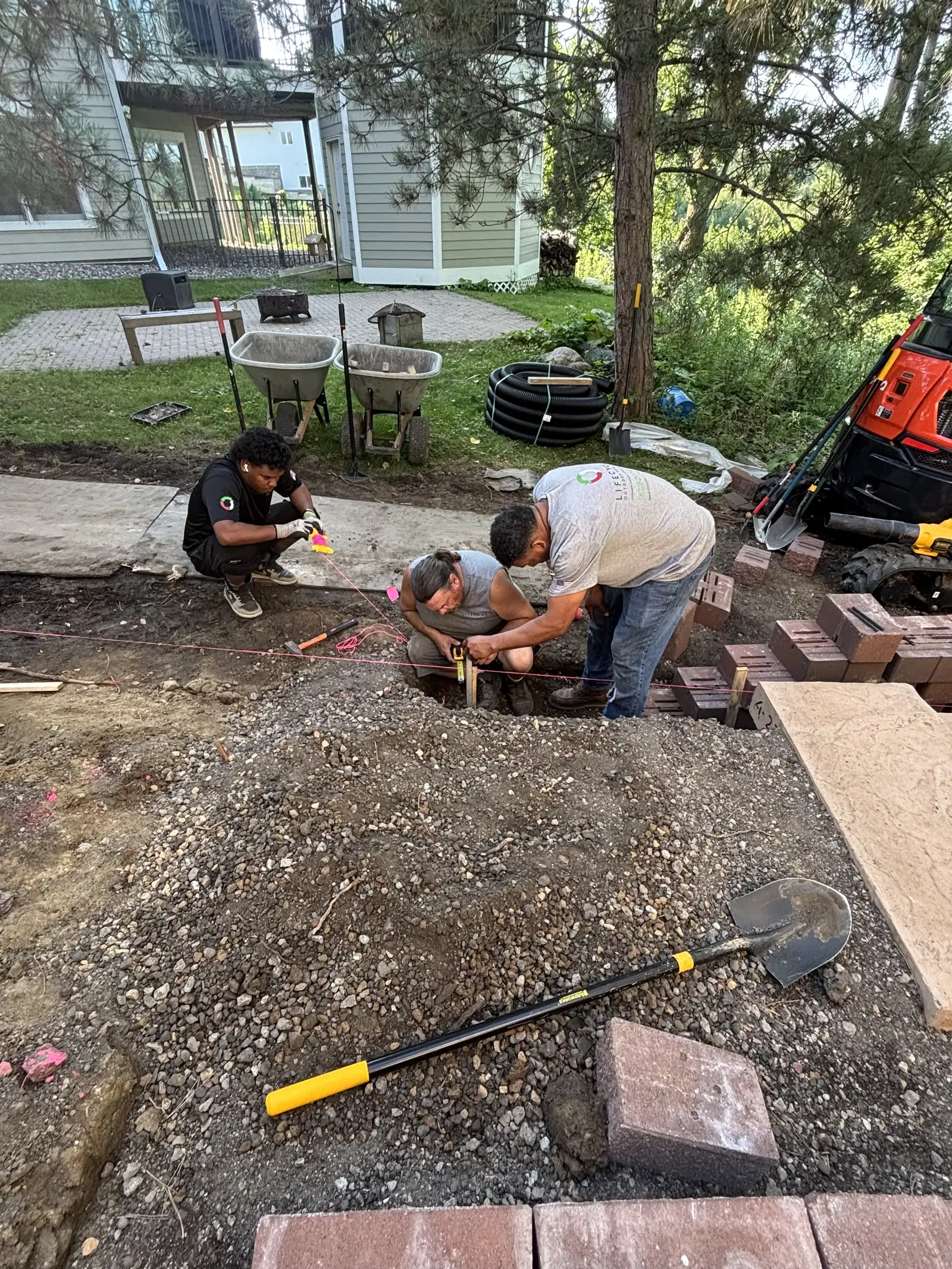
Before booking a landscape contractor in Shorewood, ask how the contractor will handle water movement, grade changes, access, materials, and the work hidden below the finished surface. Those answers help you compare the real scope, not just the number at the bottom of an estimate.
Shorewood homeowners often call about one visible issue: a tired patio, a leaning wall, a wet side yard, worn steps, overgrown plantings, or a backyard that no longer fits how the family uses the property. A complete landscape contractor looks beyond that first request. Around Lake Minnetonka, the finished space has to work with mature trees, older hardscape, tight access, sloped yards, runoff, shoreline-adjacent areas, and Minnesota freeze-thaw cycles.
Lifecycle Outdoor Services provides design-build landscape construction for Shorewood and Minnetonka properties. Use the estimate form to share photos, site conditions, timing, and the outdoor improvements you want to coordinate.
Place cooking, fire, seating, and circulation zones
A strong estimate starts with the problem, not only the product. A paver patio may need corrected pitch before the new surface goes in. A retaining wall may need drainage stone, drain tile, geogrid, and finish grading. A wet lawn may need a grading or yard drainage plan before sod or plantings make sense. A front entry may need safer steps, lighting, and material transitions that work with the driveway and walk.
Ask the contractor to explain the purpose of the work in plain language. Are you trying to control water, gain usable space, stabilize a slope, reduce maintenance, replace failing materials, improve lake access, or prepare for a future outdoor kitchen? The right answer affects layout, materials, base preparation, construction sequence, and budget.
Keep runoff away from appliances and gathering areas
Water is one of the biggest reasons outdoor projects fail early. In Shorewood, runoff can come from rooflines, driveways, compacted lawns, neighboring grades, slopes, or older hardscape that no longer pitches correctly. If that water is not addressed before installation, a new patio, planting bed, wall, or stairway can inherit the same settlement, washout, or saturated soil that caused the original issue.
Useful questions include: Where does water enter this area now? Where will it go after construction? Do downspouts need to be extended? Will the wall include drainage behind it? Does the patio pitch away from the home? Is a French drain or grading correction needed before visible work begins?
Lock the layout before routing utilities
Some projects can move forward with a field estimate. A simple repair, small drainage correction, or limited replacement may not require a full design package. Larger projects need more planning because the features affect each other. Patio size affects walls and steps. Wall height affects drainage and grading. Fire features, lighting, privacy screens, outdoor kitchens, and planting zones affect utility sleeves and construction order.
For multi-feature projects, landscape design and 3D renderings can clarify scale, material transitions, traffic flow, grade changes, and future phases. Ask what the design includes, how revisions are handled, and how the design work connects to the construction estimate.
Install gas, electrical, and lighting sleeves first
Finished materials are only part of the project. For paver patio installation, ask about excavation depth, base aggregate, compaction, bedding layer, pitch, edge restraint, joint material, disposal, and lawn restoration. For retaining walls, ask about base preparation, drainage stone, fabric, drain tile, geogrid when required, cap units, backfill, and final grading.
These items determine whether the project holds up through heavy rain, spring thaw, daily use, and seasonal maintenance. Two estimates can name the same finished feature while covering very different levels of preparation. Ask for a written scope that explains included work, excluded work, and conditions that could change pricing once excavation begins.
Plan deliveries and appliance access
Access matters on Shorewood lots. Side yards, fences, slopes, mature trees, irrigation, existing patios, and driveway space can all affect equipment, staging, protection, timing, and cleanup. A contractor should explain how materials and crews will reach the work area without assuming every property can be handled the same way.
This is especially important for boulder work, retaining walls, shoreline-adjacent improvements, grading, patios, and outdoor staircases. Ask where materials will be staged, what surfaces need protection, whether gates or fences affect access, and how disturbed areas will be restored when the project is complete.
Confirm clearances and review requirements
Not every landscape project needs a permit, but certain conditions should be discussed early. Wall height, drainage changes, grade changes, shoreline stabilization, erosion control, and lake-area work may require city, watershed, or other review before construction starts. It is better to address those questions before a start date is promised.
If you have a survey, city notes, HOA requirements, past drainage complaints, or shoreline concerns, share them during the first conversation. Those details can determine whether the next step is design, field evaluation, added documentation, or a phased plan that starts with the most urgent site condition.
Separate landscape work from utility connections
A landscape contractor estimate should make comparison easier. Look for clear descriptions of demolition, excavation, disposal, base preparation, drainage, materials, labor, access protection, site restoration, and cleanup. Ask whether planting, lighting sleeves, irrigation impacts, disturbed lawn repair, and future phases are included or intentionally left out.
Price matters, but an incomplete scope can become expensive later. The most useful estimate explains what is being built, why that scope fits the property, and what decisions still need to be made before construction begins.
Prepare today for a later-phase feature
Broad design-build landscape work in Shorewood or Minnetonka may connect landscape design, paver installation, retaining walls, shoreline stabilization, grading, and outdoor living spaces in one practical construction sequence.
When you are ready for property-specific guidance, use the Lifecycle Outdoor Services contact form or call (612) 220-6380. Share your address, goals, photos, timing, and known site concerns so the first conversation can focus on the right next step.
Frequently Asked Questions
What should Shorewood homeowners ask before hiring a landscape contractor?
Ask about drainage, grading, access, base preparation, material choices, design needs, permit review, cleanup, and restoration. A good answer should explain how the project fits the property, not only what the finished feature will look like.
Why do landscape contractor estimates vary so much?
Estimates vary because excavation, disposal, compaction, wall drainage, geogrid, grading, design, access protection, plantings, lighting prep, and restoration may be handled differently. Compare written scopes before comparing final prices.
Do I need design before booking a contractor?
Small repairs may not need design. Larger projects with patios, retaining walls, steps, outdoor living features, lighting, drainage, shoreline concerns, or future phases usually benefit from design before final construction pricing.
How do I request a Shorewood landscape contractor estimate?
Use the contact form or call (612) 220-6380. Include the property address, your goals, photos, preferred timing, and any drainage, slope, access, patio, wall, or shoreline-adjacent concerns.