
The most expensive mistakes in landscape construction happen before a single stone is placed. They happen when homeowners approve a plan they cannot truly visualize, when proportions look different in reality than they did on paper, and when material choices that seemed perfect in a showroom clash with the actual colors and textures of the home and surroundings.
3D landscape renderings solve all of these problems. And at Lifecycle Outdoor Services, our design fee is applied directly to your project cost when you hire us for installation — so the design pays for itself.
What Is a 3D Landscape Rendering?
A 3D rendering is a photorealistic digital model of your property showing exactly what the finished landscape project will look like from multiple angles and perspectives. Unlike flat 2D plans or hand-drawn sketches, 3D renderings show:
- Accurate proportions of walls, patios, plantings, and structures relative to your home
- Real material textures — you see the actual paver pattern, stone color, and planting species
- Grade changes and elevation differences that are impossible to convey on flat paper
- Lighting effects — how the space looks during daytime and with landscape lighting at night
- Spatial relationships — how the outdoor kitchen relates to the patio, how the retaining wall creates usable terraces, how the privacy screen blocks the neighbor's sightline
We use high-definition 3D modeling software to create these visualizations from photos and measurements of your actual property. The result is a rendering that looks like a photograph of a space that does not exist yet — until we build it.
The 5 Ways 3D Renderings Save You Money
1. You Catch Design Problems Before Construction
On a flat plan, a 400-square-foot patio looks like a gray rectangle. In a 3D rendering, you can see that it is too close to the property line, or that the fire pit blocks the view from the kitchen window, or that the retaining wall creates an awkward step at the back door. These are problems that cost thousands to fix after construction starts but cost nothing to fix in a rendering.
2. Material Selection Becomes Concrete, Not Abstract
Choosing between County Materials Grand Discover pavers and natural flagstone sounds straightforward until you see both options rendered on your actual property. One might complement your home's brick; the other might clash. One might work with the existing landscape colors; the other might look out of place. Renderings let you compare options side by side before ordering materials you cannot return.
3. Scope Creep Disappears
When you can see the complete design, you make decisions once — not three times as the project evolves on the fly. Without a visual plan, homeowners frequently change their minds during construction: "Can we make the patio bigger?" or "Can we move the wall two feet?" These mid-project changes add labor, materials, and delays. A rendering locks in the plan so everyone — homeowner, designer, and crew — is building toward the same vision.
4. You Budget Accurately
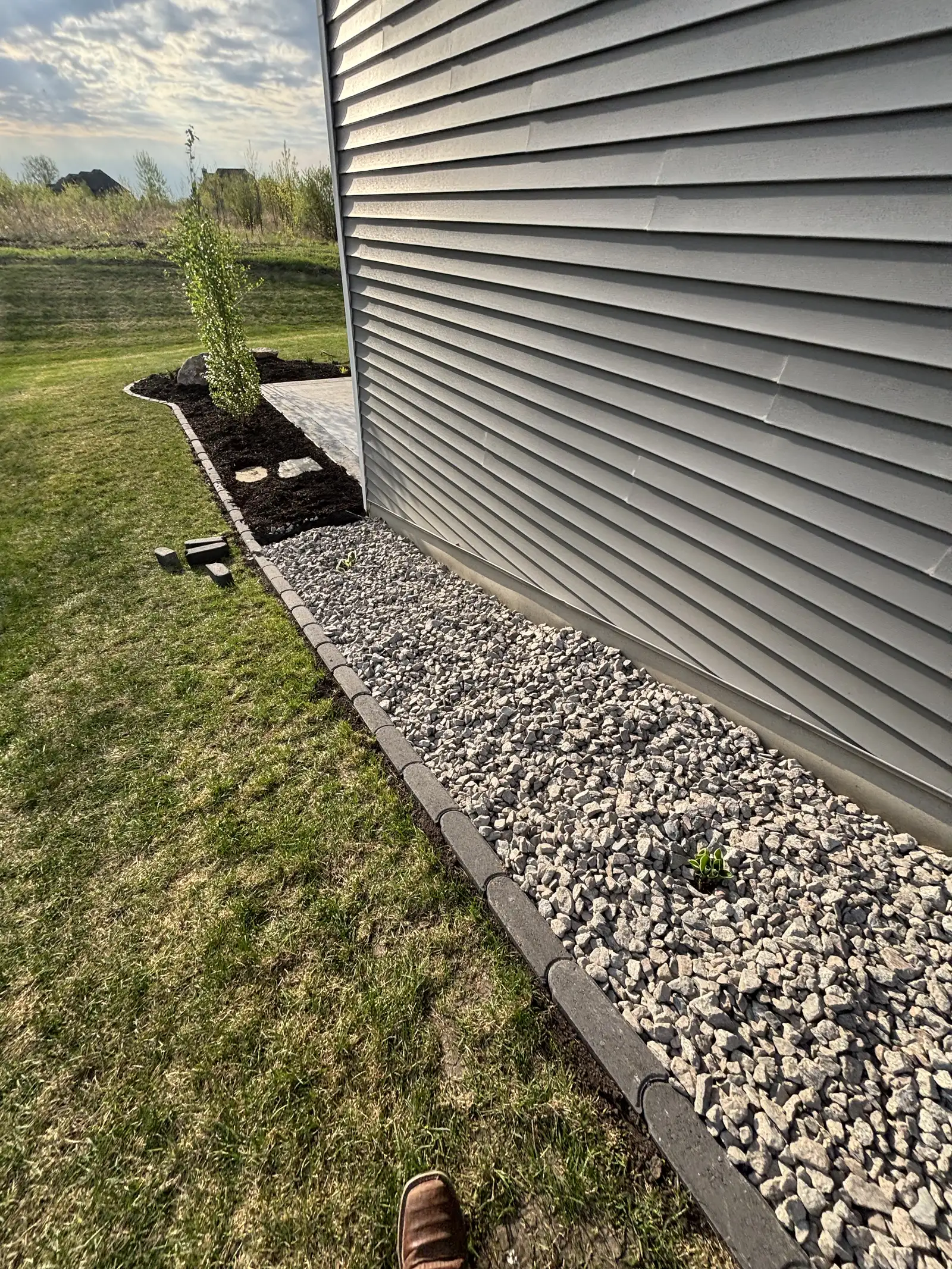
A detailed 3D rendering includes specific material quantities, which means our quote is based on actual measurements rather than rough estimates. You know exactly what you are paying for, and there are fewer surprises when the invoice arrives. Our Medina landscape design project is a great example — the rendering showed exactly which plantings, boulder placements, and grading changes were included, and the final installation matched the plan precisely.
5. Multi-Phase Projects Stay Coherent
Many Lake Minnetonka homeowners plan their outdoor renovations in phases — retaining walls this year, patio next year, outdoor kitchen the year after. Without a master rendering, each phase risks looking disjointed. With a rendering, we design the complete vision upfront and execute it in phases that build toward a coherent final result.
Our Design Process: From Consultation to Construction
Step 1: On-Site Consultation (Free)
We visit your property, take measurements and photos, discuss your goals and budget, and assess site conditions like soil type, drainage, grade changes, and sun exposure. This visit is free and carries no obligation.
Step 2: Design and Rendering
We create a detailed 3D rendering of the proposed project using your property photos and measurements. This includes material selections, planting plans, grading changes, and lighting layouts. You receive the rendering with a detailed, itemized quote.
Step 3: Revisions
Design revisions are included. We refine the plan until it matches your vision — adjusting materials, moving elements, resizing features, or exploring alternatives. The rendering is the conversation tool that makes this process efficient and clear.
Step 4: Construction
Once you approve the design, we build exactly what you see in the rendering. Our Medina project — a new construction landscape design including granite rock, boulder outcroppings, and 25 plantings — went from rendering to completed installation in just 4 days because the plan was clear, the materials were pre-ordered, and the crew knew exactly what to build.
The Design Fee: An Investment, Not an Expense
We charge a design fee for the 3D rendering process because it requires significant time, software, and expertise. However, this fee is applied directly to your project cost when you hire us for installation. In other words, the design pays for itself — you get a professional visualization and a detailed plan, and every dollar you spent on design is deducted from the construction cost.
If you decide not to proceed with installation, you keep the rendering and the detailed plan. Many homeowners use it to get comparative quotes from other contractors or to plan future phases on their own timeline.
See Your Space Before We Build It
The days of approving a landscape plan you cannot truly visualize are over. 3D renderings give you confidence, prevent expensive mistakes, and ensure the finished project matches your expectations. Schedule a free consultation to learn how our design process works for your property.