
Erosion Does Not Wait -- It Accelerates
Erosion on Lake Minnetonka properties is not a gradual, predictable process. It accelerates. Each season of ice heaving, wave action, snowmelt runoff, and heavy rain removes more soil, undercuts more roots, and shifts more material than the season before. What starts as a minor washout behind your retaining wall becomes a gully. A small area of exposed soil on a hillside becomes a slide zone. A slightly receded shoreline becomes a structural threat to your dock, seawall, or foundation.
The Lake Minnetonka region presents some of Minnesota's most challenging erosion conditions. Lakefront properties face wave action from boat traffic, ice push during spring breakup, fluctuating water levels, and concentrated runoff from steep slopes above. Inland hillside properties deal with clay-heavy soils that shed water rather than absorbing it, creating erosion channels that deepen with every rainstorm.
At Lifecycle Outdoor Services, we specialize in erosion control projects that other contractors turn down. Steep slopes, tight lake access, failing retaining walls, complex permitting -- these are the conditions where 25+ years of experience matters most. We evaluate the full erosion system, design a permanent solution, handle all permitting through the Minnehaha Creek Watershed District (MCWD) and local cities, and build it with materials that handle Minnesota's freeze-thaw cycles for decades.
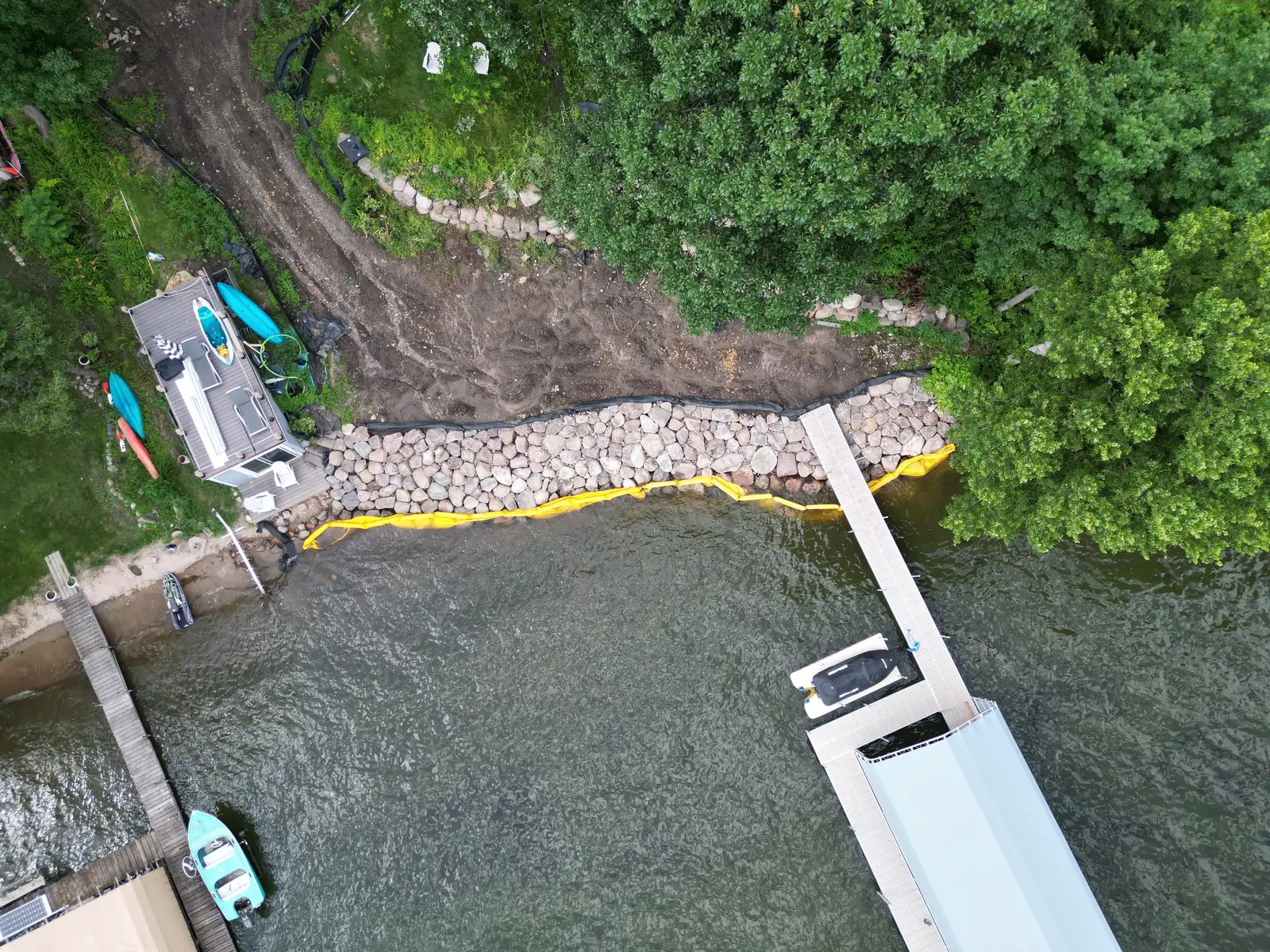
Erosion Control Services
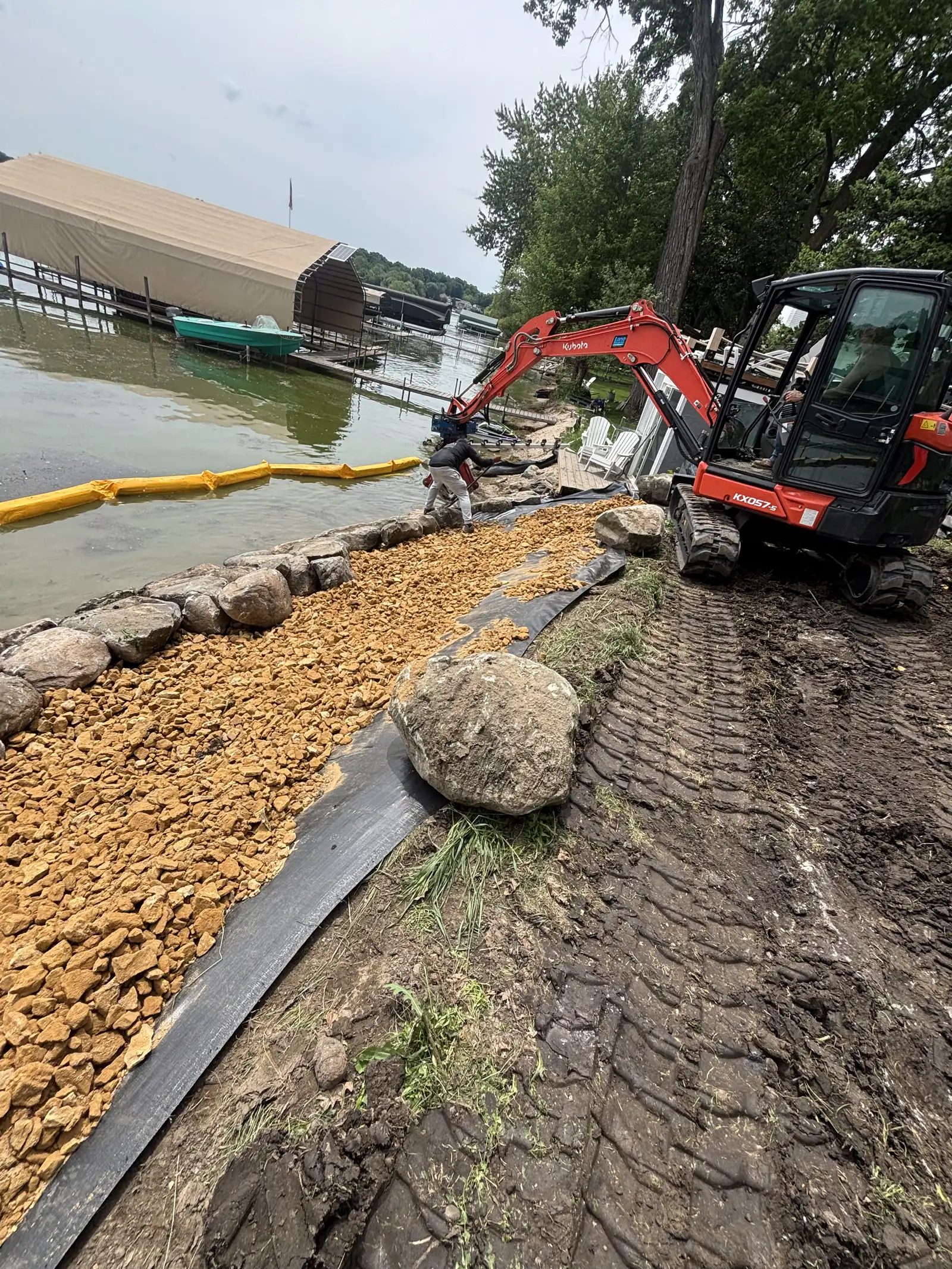
Lakeshore Riprap
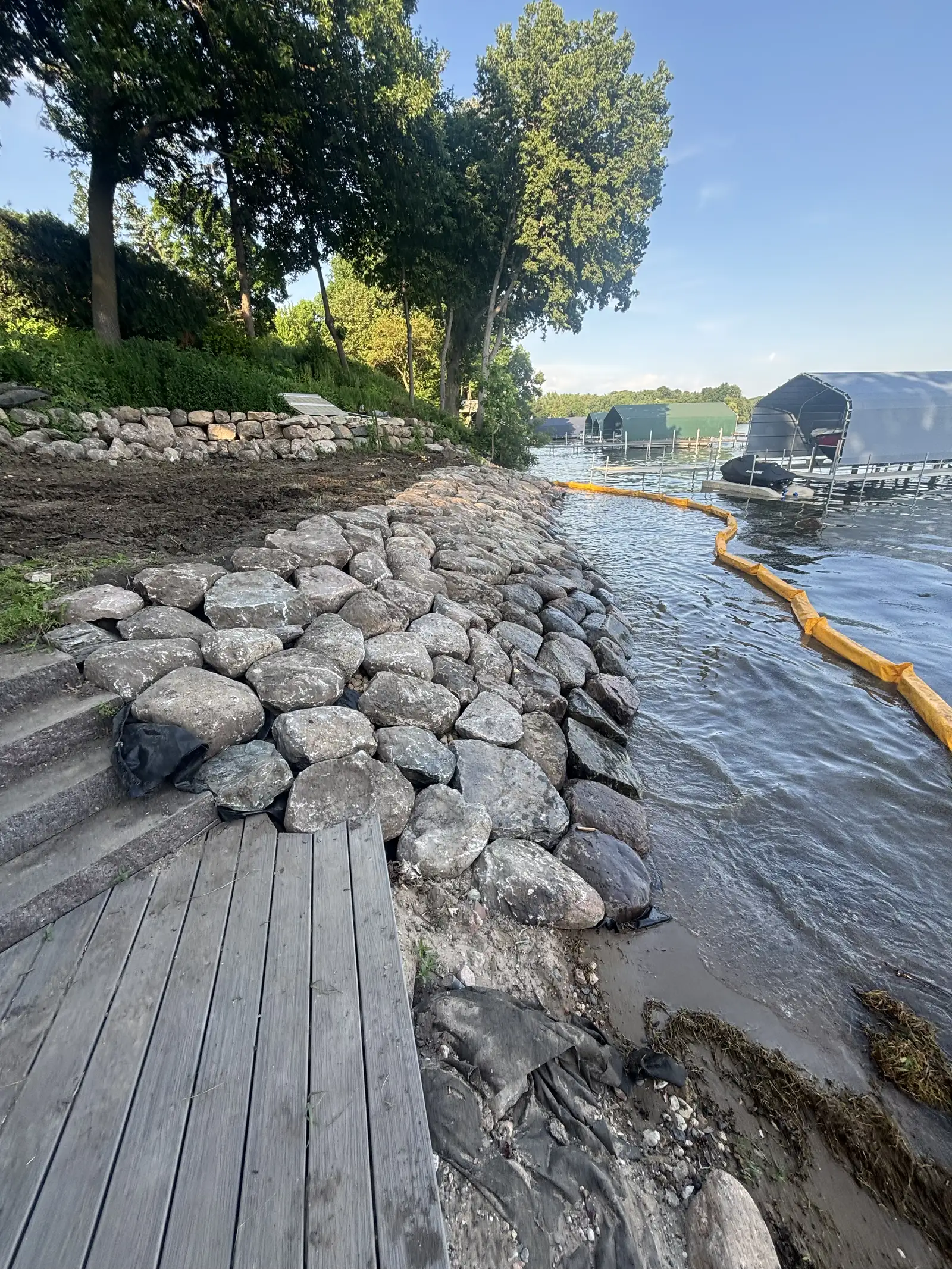
Riprap is the most effective and widely permitted method for protecting Lake Minnetonka shorelines from wave erosion, ice push, and water-level fluctuations. We remove failing shoreline debris -- old concrete, rotting timber, shifted rocks -- reshape the shoreline to the correct profile, and rebuild the lake edge using large fieldstone boulders sized for the specific wave energy and ice conditions at your location.
Proper riprap installation requires more than dumping rocks along the waterline. Each boulder must be selected for size and shape, placed at the correct angle, and interlocked with adjacent stones to create a stable mass that resists movement. The base must be prepared with filter fabric and gravel bedding to prevent soil migration through the rock. And the toe of the riprap must extend below the normal water line to anchor the system against ice push and wave scour.
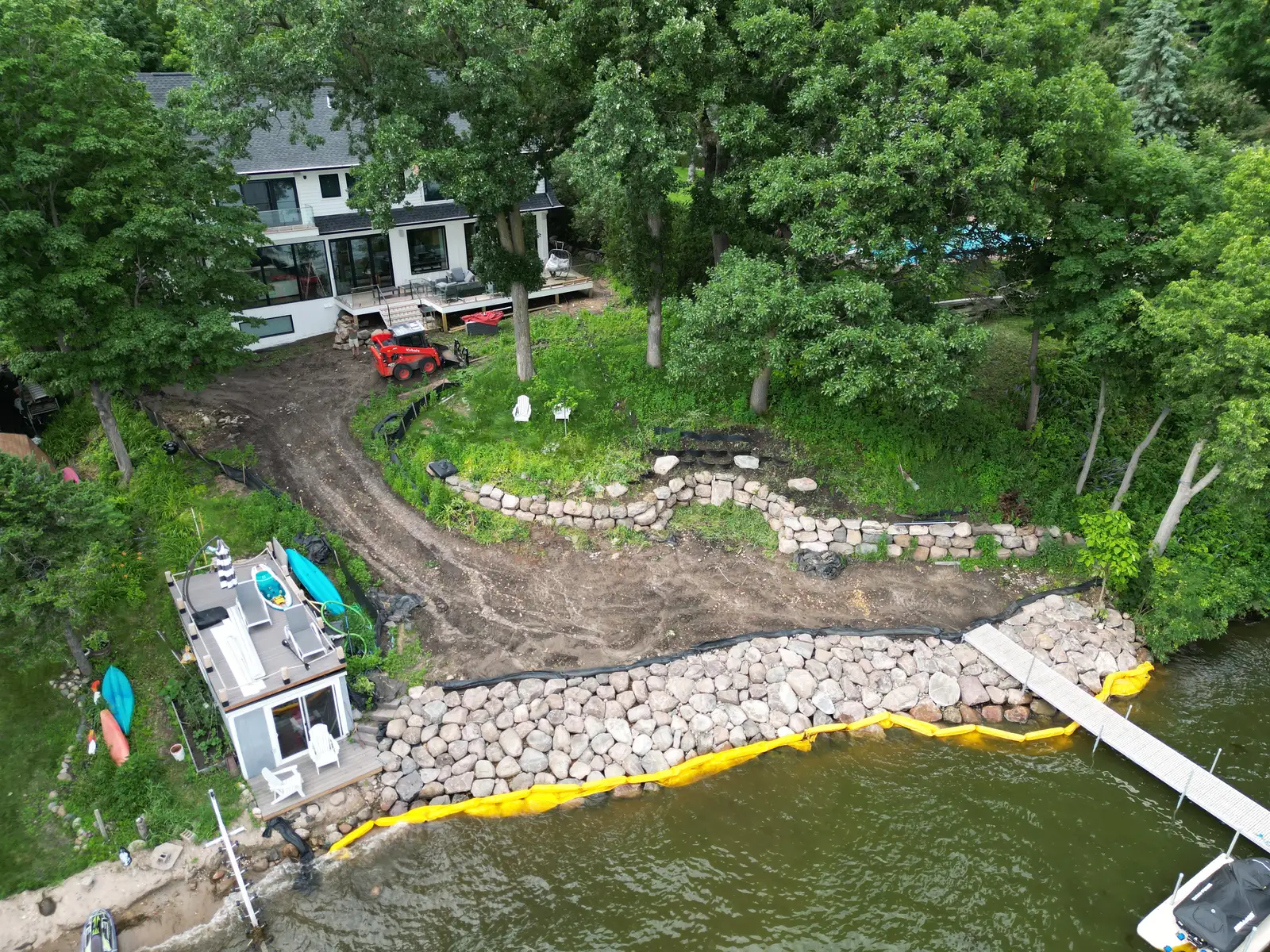
Our Orono riprap rebuild project demonstrates this approach: we removed years of failing shoreline material, reshaped the entire lake edge, and rebuilt it with large fieldstone boulders. The investment ranged from $26,000 to $35,000, and the finished shoreline is designed to withstand decades of Lake Minnetonka's freeze-thaw cycles, boat wakes, and seasonal water level changes.
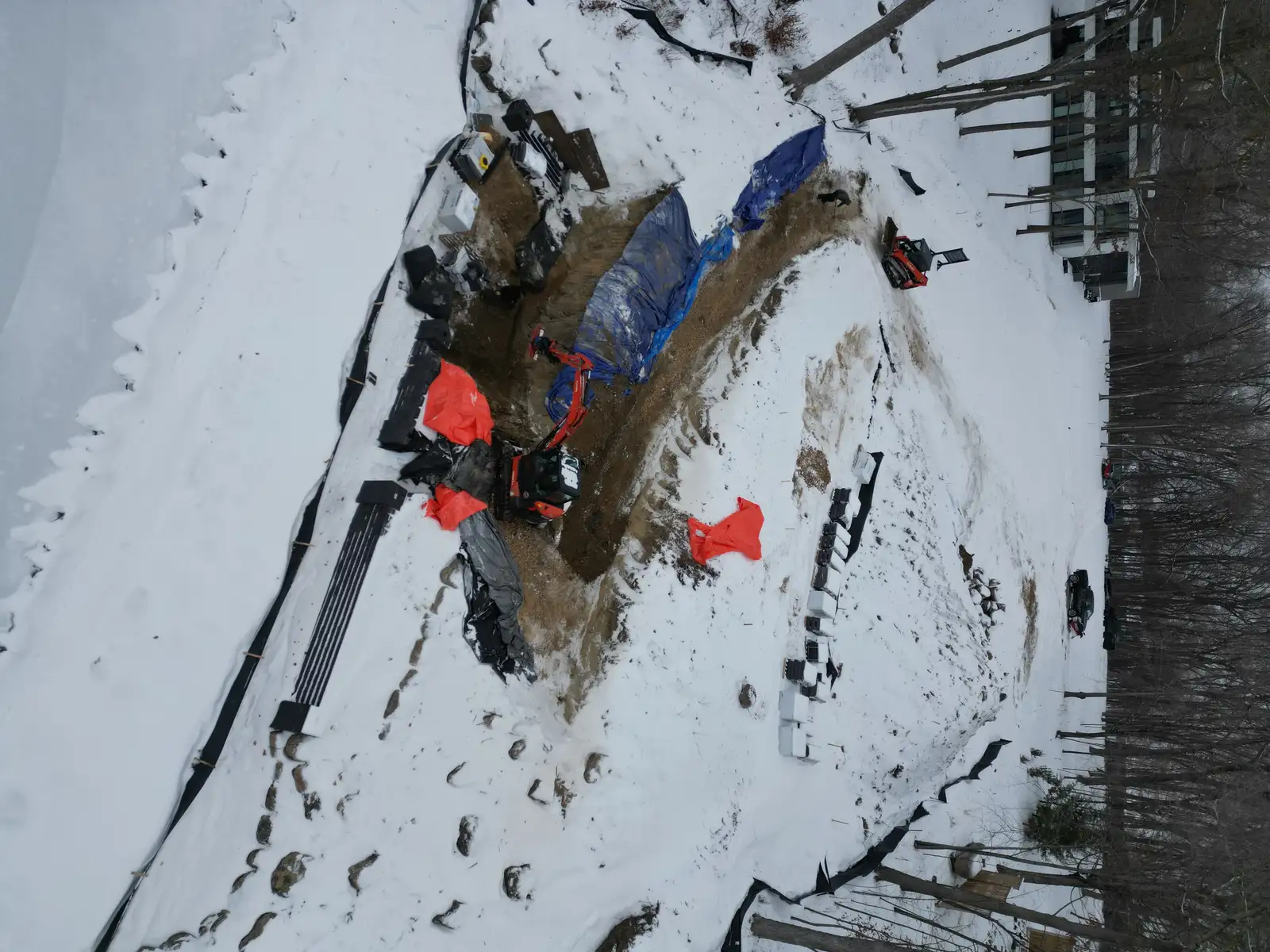
Hillside Stabilization
Hillside erosion threatens property values, outdoor usability, and even structural safety. Steep slopes that erode create hazardous conditions -- loose soil, exposed roots, undermined structures, and unstable walking surfaces. Our hillside stabilization approach combines engineered retaining walls, boulder outcropping systems, strategic plantings, and drainage correction to permanently stabilize slopes and create usable, accessible outdoor space.
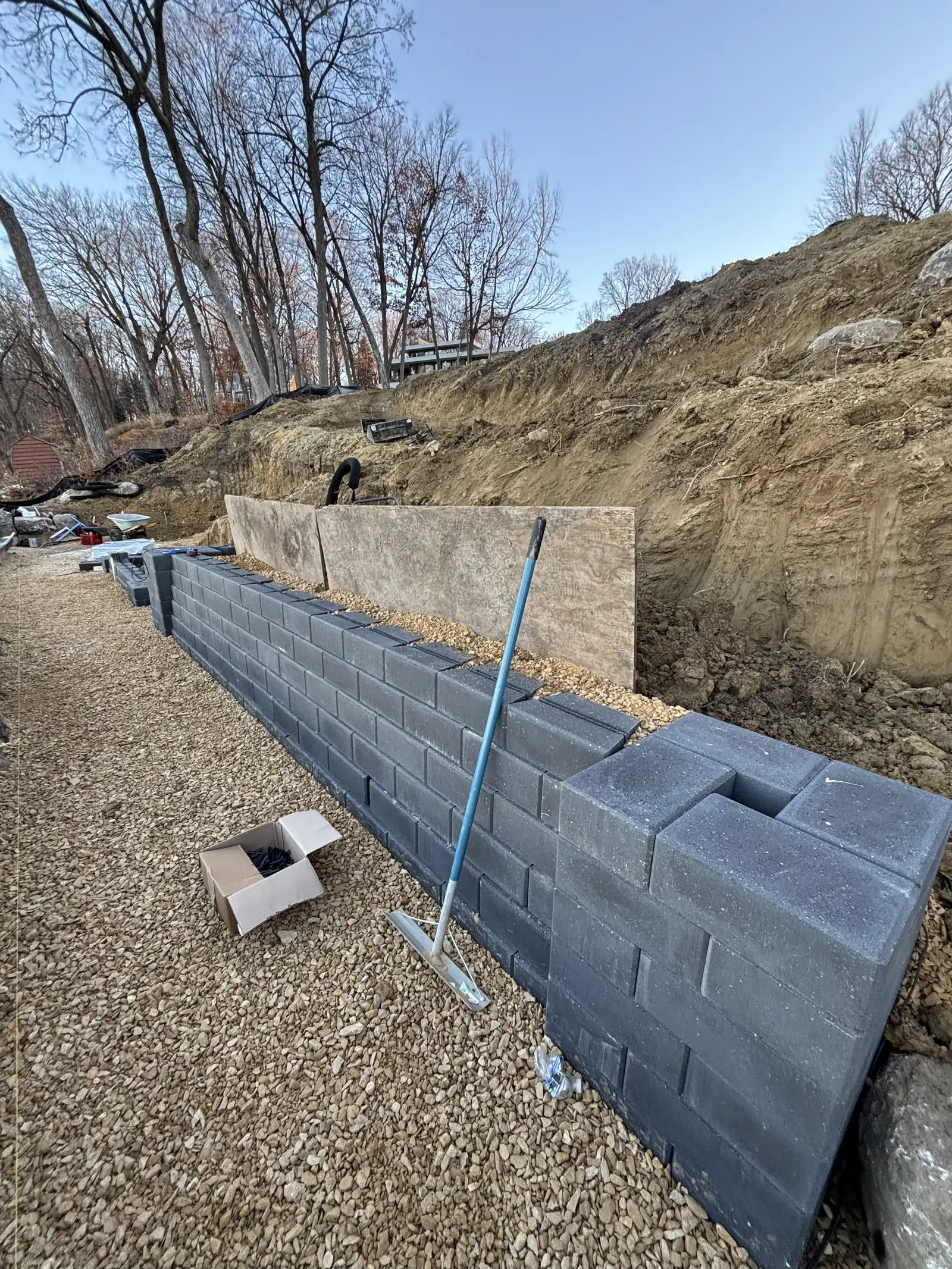
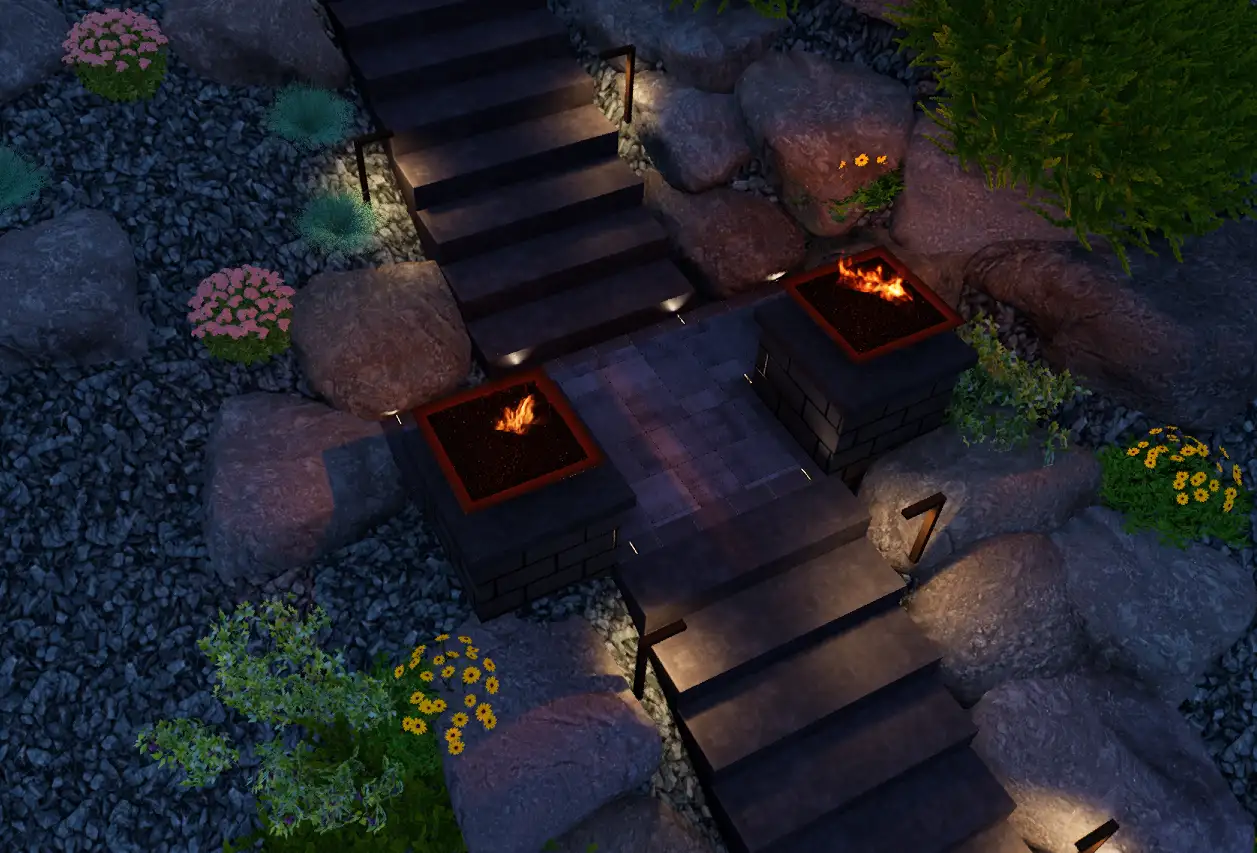
Our Mound project is the definitive example: a lakeside property with failing retaining walls, rotting timber steps, large eroded gullies, rotten stumps, and unsafe conditions throughout. The homeowner had struggled for years to find a contractor willing to take on the full scope. We designed and built an engineered County Materials smooth-faced block retaining wall, a large staircase for lake access, and a boulder outcropping system with strategic plantings for permanent hillside stabilization. The investment ranged from $195,000 to $245,000 -- and we delivered the design concept within one week, with a 45-day turnaround from concept to completed installation.
Every hillside stabilization project starts with a thorough evaluation of soil conditions, slope angles, water flow patterns, and structural loads. We determine whether the slope requires engineered walls with geogrid reinforcement, natural boulder systems, terracing, or a combination approach. Materials are always selected for Minnesota freeze-thaw durability.
Grading & Drainage Correction
Most erosion problems have a drainage component. Water that is not properly redirected creates channels, undermines structures, saturates soil, and accelerates slope failure. Our erosion control projects always include a drainage evaluation and correction plan.
We install drain tile behind retaining walls, redirect surface runoff away from slopes, grade transitional areas to prevent water from concentrating in vulnerable zones, and install catch basins and discharge lines where needed. For lakefront properties, we coordinate drainage discharge with shoreline work to ensure water reaches the lake through controlled paths rather than erosive channels.
We Handle Watershed & City Permits
Erosion control work on Lake Minnetonka and other regulated waterways requires permits from both the local city and the Minnehaha Creek Watershed District (MCWD). The permitting process involves site plans, erosion control plans, stormwater management documentation, and sometimes environmental impact assessments.
We manage the entire permitting process from application to approval. Our experience with MCWD regulations and local city requirements means fewer revision requests and faster approvals. Most permits take 4 to 8 weeks, and we coordinate the timeline so construction begins as soon as permits are in hand.
Attempting erosion control work without proper permits can result in stop-work orders, fines, and mandatory restoration of the disturbed area to its original condition -- at your expense. Working with a contractor who understands the regulatory landscape eliminates that risk.
- Minnehaha Creek Watershed District (MCWD) applications
- City of Shorewood, Minnetonka, Orono, Mound, and surrounding municipalities
- Site plans and erosion control documentation
- Stormwater management compliance
- Post-construction inspections and closeout
Erosion Control Projects We Have Completed
 Mound, MN
Shoreline & Hillside Stabilization
Engineered smooth-faced block retaining wall, large staircase for lake access, boulder outcropping system, strategic plantings, and drainage correction. 45-day concept to installation.
 Orono, MN
Lake Minnetonka Riprap Rebuild
Removed failing shoreline debris, reshaped shoreline, rebuilt lake edge with large fieldstone boulders. Full watershed and city permitting handled.
Erosion Control FAQ
Shoreline erosion control costs vary significantly based on the length of shoreline, severity of erosion, access conditions, and type of solution required. Simple riprap projects typically range from $26,000 to $35,000, while comprehensive shoreline and hillside stabilization projects involving engineered retaining walls, staircases, and drainage systems can range from $100,000 to $245,000 or more. We provide detailed, itemized quotes after an on-site evaluation.
Yes. Any shoreline modification on Lake Minnetonka requires permits from both the local city (Shorewood, Orono, Mound, etc.) and the Minnehaha Creek Watershed District (MCWD). We handle the entire permitting process, including site plans, erosion control documentation, and stormwater management compliance. Most permits take 4 to 8 weeks for approval. Our experience with local regulations means fewer revisions and faster approvals.
Construction time for shoreline riprap projects typically runs 1 to 3 weeks depending on the length of shoreline, access conditions, and complexity. However, the total project timeline including permitting is usually 6 to 12 weeks. We coordinate the schedule so construction begins as soon as permits are approved. Larger projects like hillside stabilization with engineered walls may take 4 to 8 weeks of construction time.
Riprap uses large, interlocking boulders to armor the shoreline against wave action and ice push. It is the most common and cost-effective solution for protecting lakefront edges. Retaining walls use engineered block or stone to hold back soil on slopes and create level terraces. Many erosion control projects use both: riprap at the water's edge and retaining walls higher on the slope to stabilize the hillside and create usable space. We evaluate your specific conditions and recommend the right combination.
Some erosion control work can be done during winter, and frozen ground actually provides certain advantages for heavy equipment access on soft or wet sites. However, most shoreline work on Lake Minnetonka is best performed when the lake is ice-free (typically May through November) so we can properly set riprap at and below the water line. We schedule projects to align with optimal conditions and permit timing.
Protect Your Property Before the Next Storm
Schedule your free on-site erosion evaluation. We'll assess the damage, identify the root cause, and provide a detailed plan with transparent pricing.